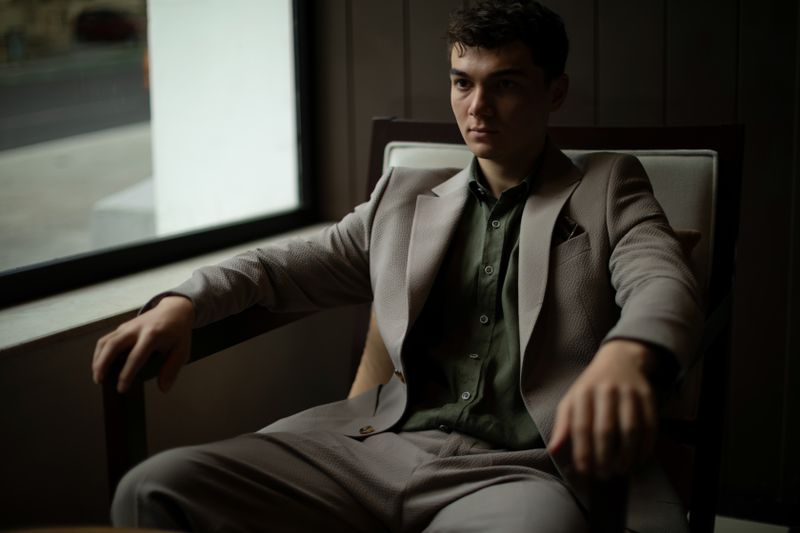


From the outside, modelling can look effortless.
A striking photograph. A beautiful location. Designer clothing. A professional team. Perhaps a campaign appears on a billboard in London, a fashion editorial lands in a magazine, or a model’s face becomes familiar across social media.
But behind that finished image is a very different story.
Modelling can be exciting, creative and genuinely rewarding. It can open doors to fashion, commercial campaigns, advertising, television, e-commerce and other forms of creative work.
It can also involve rejection, uncertainty, early call times, long journeys, changing schedules, uncomfortable working conditions and periods when very little seems to happen.
That contrast is one of the things aspiring models are often least prepared for.
If you are considering modelling in the UK, understanding what the industry is really like can be just as important as having the right look.
MODELLING IS NOT AN INSTANT PATH TO FAME
One of the biggest misconceptions about modelling is that being signed means you have made it.
It does not.
Representation can create opportunities, but opportunities still have to be won. Clients choose models according to the brief, the concept, the audience, the budget, availability, experience and the particular qualities they need for a project.
Sometimes you may be perfect for a casting and still not get the job.
Sometimes another model simply fits the brief better.
And sometimes the job does not go ahead at all.
This can be difficult to understand when social media makes success appear immediate. A model posts a campaign today, receives thousands of likes and seems to have arrived overnight.
What you do not see is everything that happened beforehand.
The castings that did not work out. The applications that received no response. The days spent travelling. The preparation. The portfolio development. The waiting. The repeated attempts.
A modelling career is usually built through accumulation rather than one dramatic breakthrough.
THE GLAMOUR IS REAL, BUT SO IS THE HARD WORK
There are glamorous moments in modelling.
There are also plenty of moments that would never make it onto Instagram.
A booking might mean leaving home early, travelling across London or elsewhere in the UK, waiting between takes, changing outfits repeatedly and spending hours on set.
A location shoot can look beautiful in the final image while being cold, windy or physically demanding behind the camera.
An apparently simple campaign can require hours of preparation.
And schedules can change.
The finished photograph may last for years. The working day behind it may have been much less glamorous.
That does not make modelling a bad career. It simply means the reality is more complete than the image.
REJECTION IS PART OF THE JOB
Few things affect a new model more than discovering how often rejection can happen.
You can have the right measurements, a strong portfolio and professional experience and still hear no.
That is because casting is not always a judgement of whether you are good enough.
A client may need a particular age range, appearance, personality, clothing size, location, hair colour, availability or overall image.
You might be an excellent model and simply not be the model required for that particular campaign.
Learning this distinction matters.
If every rejection becomes a judgement of your worth, modelling can become emotionally exhausting.
If you understand that castings are about matching people to specific briefs, rejection becomes easier to process.
The goal is not to be right for everyone.
The goal is to be right for the right opportunities.
THERE IS NO GUARANTEE OF A STEADY INCOME
Another uncomfortable truth is that modelling income can be unpredictable.
A successful booking does not automatically create a stable monthly salary. Work can come in waves. One month may be busy while the next is comparatively quiet.
A model therefore needs to think beyond individual bookings.
Understanding fees, usage, commissions, expenses and payment arrangements is important before accepting work.
It is also sensible to understand exactly when payment is expected and who is responsible for paying it.
The UK government provides specific guidance for fashion and photographic models concerning agency fees and commissions. Modelling agencies can charge certain fees, but terms and conditions must be agreed before charges are made, and agencies cannot charge an upfront fee for finding work for photographic and fashion models.
That is why reading the paperwork is not a boring administrative exercise.
It is part of protecting your career.
READ THE CONTRACT BEFORE YOU SIGN
A contract should never be something you sign simply because you are excited to have been offered representation.
Take your time.
Look at the length of the agreement. Understand how either side can end it. Check what commission or other fees may apply. Understand what services are being provided and whether additional services are optional or required.
UK government guidance states that terms and conditions for modelling agency services and fees must be agreed in writing. They should cover matters including the services provided, authority to act on the model’s behalf, fees or commissions, how those fees are paid, refunds and termination arrangements.
If something is unclear, ask.
A professional relationship should leave room for reasonable questions.
You should know what you are agreeing to before you put your name to it.
BE CAREFUL ABOUT PAYING FOR SERVICES YOU DO NOT UNDERSTAND
New models are often eager to improve their portfolios.
That is understandable.
Professional photographs can be valuable. Test shoots can help develop experience. Travel may sometimes be necessary. Training or other professional services may also have a legitimate place in someone’s development.
But spending money does not guarantee bookings.
A better question than “Will this make me successful?” is:
“What exactly am I paying for, and what am I realistically receiving in return?”
UK rules distinguish between different types of modelling and agency fees. For fashion and photographic models, agencies cannot charge upfront fees for finding work, although certain agreed fees can apply after work has been found. Separate services, such as producing a photo or show reel, are also subject to specific requirements.
That makes transparency important.
Before paying for anything, understand the service, the cost and the terms.
A BEAUTIFUL PORTFOLIO IS NOT A CAREER BY ITSELF
A portfolio matters.
But a portfolio cannot do everything.
A strong image may get someone’s attention. It does not guarantee that a client will book you.
Clients also care about whether a model fits their brief and whether the model can work professionally.
That can mean being punctual, prepared, communicative, adaptable and respectful of the people around you.
A model who looks impressive in photographs but creates difficulties on set may not be the first person a client wants to book again.
Professional reputation matters.
YOU MAY HAVE TO PROMOTE YOURSELF
Modelling is not always a case of waiting for the phone to ring.
Models increasingly need to maintain their professional presence, keep portfolios current and make sure relevant people can see their work.
That does not mean turning your entire life into content.
It means understanding how you present yourself professionally.
Your portfolio, profile photographs, social presence, communication and overall presentation can all contribute to how clients perceive you.
For some models, this is uncomfortable.
The industry can require confidence without becoming performative.
You need to be able to show people what you can offer without feeling that you have to constantly prove your value.
YOUR MENTAL HEALTH MATTERS
There is another side of modelling that deserves more attention.
Constant comparison can be exhausting.
You may work alongside people who are taller, younger, more experienced, more established or simply different from you.
Social media can make that comparison even harder.
Then there are castings where you are rejected without knowing why.
Over time, it can become tempting to measure your value through bookings, followers, compliments or appearance.
That is a dangerous place to build a career.
Your appearance is part of your professional work.
It is not the entirety of who you are.
The healthiest models learn to separate professional feedback from personal identity.
You can improve your posing, presentation, communication or portfolio without deciding that there is something fundamentally wrong with you.
YOUR BODY IS PART OF THE WORK, NOT A PROBLEM TO SOLVE
Modelling naturally involves attention to appearance.
That does not mean every model should try to conform to one universal idea of beauty.
The UK market includes fashion, commercial, lifestyle, beauty, e-commerce, advertising and many other forms of modelling. Different clients need different kinds of people.
For a model, the challenge is not necessarily becoming someone else.
It is understanding where your natural characteristics, personality and presentation fit.
Trying to force yourself into every possible category can be exhausting.
Knowing your strengths can be far more useful.
TRAVEL CAN BE PART OF THE JOB
The UK may look small on a map, but modelling can still involve significant travel.
A model based in London may be asked to attend work elsewhere. A commercial booking may take place outside the capital. A casting can require travel even when the eventual booking is not guaranteed.
That means time, transport costs and scheduling need to be considered.
The same applies to international opportunities.
Travel can be exciting, but it should not automatically be treated as glamorous.
Sometimes it is simply part of getting to work.
ASK QUESTIONS BEFORE YOU SAY YES
One of the best ways to protect yourself is surprisingly simple:
Ask questions.
Before accepting a job, understand what the work involves.
What is the fee?
What are the working hours?
Where is the location?
What will the images or footage be used for?
How long will they be used?
Are there expenses?
When will payment be made?
Who is the client?
What exactly is expected from you?
If you are represented by an agency, understand the agency’s role and the agreed terms.
Good communication does not make you difficult.
It makes you professional.
A CAREER CAN TAKE TIME TO DEVELOP
Perhaps the biggest thing no one tells you about modelling is that there is rarely a single moment when you suddenly become “a model”.
It develops.
One booking leads to another contact.
A good job strengthens your portfolio.
A professional reputation encourages repeat opportunities.
Experience makes castings less intimidating.
You become better at understanding briefs.
You learn which opportunities suit you.
You become more comfortable saying no when something does not feel right.
Over time, these small developments can become a career.
That is very different from the instant success story often presented online.
SO, IS MODELLING WORTH IT?
It can be.
But you should enter the industry with open eyes.
Modelling can give you creative experiences, professional connections, confidence and opportunities that you may never have encountered otherwise.
It can also test your patience.
There will be waiting.
There will be rejection.
There may be uncertainty.
There will be days when the work feels exciting and days when it simply feels like work.
The important thing is to understand the difference between having realistic expectations and giving up on ambition.
You do not need to believe that modelling will make you famous.
You do not need to assume every casting will become a booking.
You do not need to spend money simply because someone tells you it will guarantee success.
And you do not need to change everything about yourself to belong in the industry.
What you need is a realistic understanding of the profession, a willingness to work, and the judgement to recognise opportunities that genuinely make sense for you.
THE REALITY CAN STILL BE EXCITING
The truth about modelling is not that the glamour is fake.
It is that the glamour is only one part of the story.
Behind the finished campaign is preparation.
Behind the photograph is patience.
Behind the booking is often rejection.
Behind the confidence is experience.
And behind a sustainable career is usually a model who has learned not only how to present themselves, but how to understand the business around them.
At Choice Model Management, we believe aspiring models deserve to approach the industry with realistic expectations and a clear understanding of professional representation.
Because modelling should not be sold as a shortcut to fame.
It should be approached as a profession.
And like any profession, the more you understand before you begin, the better prepared you are for what comes next.