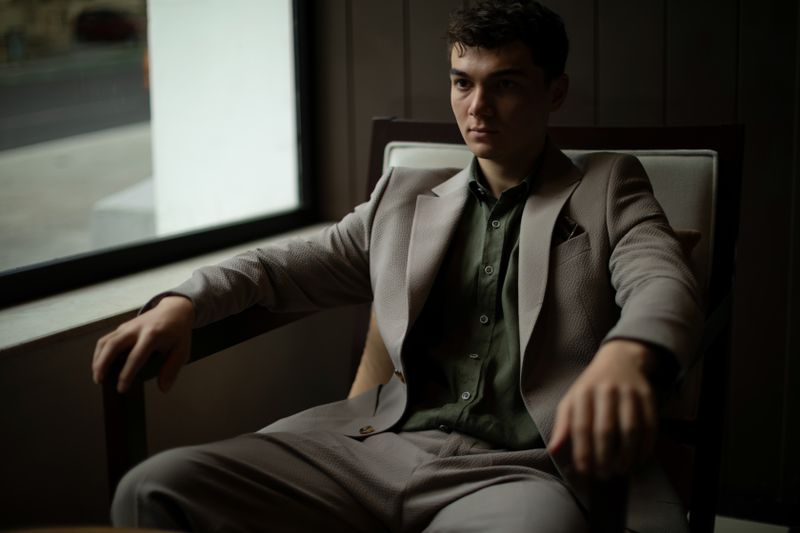


The finished images may look effortless.
A campaign photograph captures a perfectly timed expression. A catwalk clip lasts seconds. A commercial might show a model smiling in a beautiful location, wearing clothes that appear to fit as though they were made specifically for them.
But behind those polished moments is a working day that can begin before sunrise, end late at night and change completely with very little warning.
At Choice Model Management, we believe that understanding the reality of professional modelling is important for anyone considering the industry. A modelling career can be exciting, creative and rewarding, but it also demands adaptability, organisation and resilience.
So, what does a real day in the life of a working model actually look like?
5:30 AM: The Day Starts Before the Shoot Does
For some models, the alarm goes off long before the first photograph is taken.
A morning shoot in London might require travelling from another part of the city, or even travelling between cities the previous evening. Public transport delays, traffic, unfamiliar locations and early call times can quickly become part of the routine.
And that is assuming the schedule has not changed overnight.
One of the realities of working in modelling is that plans can move quickly. A fitting can be rescheduled. A casting can be moved online. A client may change the location. Weather may affect an outdoor production. A booking that appeared unlikely can suddenly become confirmed.
For a working model, flexibility is not simply a useful quality. It is often part of the job.
This can make ordinary personal planning difficult. Birthdays, weekends, appointments and time with friends or family may need to work around a diary that is not always predictable.
7:30 AM: Arriving at the Location
The first challenge is often simply finding the right place.
A studio in London may be straightforward. A countryside location, warehouse, private property or temporary production space can be more complicated.
Once the model arrives, the working day begins to take shape.
Hair and make-up may already be waiting. Wardrobe rails may be prepared. The photographer, stylist, producer, assistants and creative team may all be working towards a carefully planned concept.
Or, sometimes, plans are still changing.
A different outfit may be selected. The weather may force a new approach. A client may request an additional look. A shoot expected to finish early may suddenly require more content.
This is why clear communication matters so much in professional modelling.
A model needs to know important details such as:
- Where they need to be
- What time they are expected to arrive
- How long the booking is expected to last
- What clothing or items they may need to bring
- Whether hair and make-up are provided
- What type of work they are doing
- Who they should contact if something changes
Good preparation does not remove every surprise, but it can make a demanding day considerably easier to manage.
9:00 AM: Hair, Make-Up and Wardrobe
This is often where the transformation begins.
Depending on the type of booking, the model may spend a significant amount of time preparing before stepping in front of the camera.
Commercial modelling may require a natural and relatable appearance. Editorial work may involve more dramatic styling. A fashion campaign may require multiple rapid changes throughout the day.
The model’s role is not simply to sit still while others prepare them.
They are expected to remain professional, communicate clearly and adapt to the creative direction of the team.
A garment may feel uncomfortable. Shoes may be difficult to walk in. A particular hairstyle may take time to create. Yet the model still needs to remain focused on the work ahead.
10:00 AM: The Camera Turns On
This is the part most people see.
But modelling is considerably more physically demanding than holding a pose for a few seconds.
A photographer may ask for the same movement repeatedly. A commercial shoot may require multiple takes. An outdoor campaign may involve working in wind, rain or unexpectedly cold conditions.
A model might be asked to make a pose look relaxed while their muscles are working hard to maintain it.
They may need to walk repeatedly for video content. They may be required to hold a position while lighting is adjusted. They may change expressions and body language rapidly to create a wide variety of usable images.
The final photograph does not show the repetition.
It does not show the uncomfortable shoes.
It does not show the cold between shots.
And it rarely shows how many attempts were required to create one apparently effortless moment.
1:00 PM: Lunch Does Not Always Mean a Break
On a busy production, the middle of the day can pass surprisingly quickly.
There may be lunch, but there may also be wardrobe changes, preparation for the next look or discussions about the afternoon schedule.
This is where the lifestyle can become mentally demanding.
Models often need to remain present and confident even when they are tired. Their appearance, performance and professionalism can feel constantly visible.
For newer models especially, this can create pressure.
There can be a temptation to compare yourself with everyone around you. Someone may appear more experienced. Another model may have a larger portfolio. Social media can make other careers look constantly successful.
But modelling is not a competition that can be measured by one photograph, one booking or one quiet month.
Every working model experiences periods of momentum and periods of uncertainty.
Learning to separate personal self-worth from daily booking outcomes can be an important part of building a sustainable career.
3:00 PM: The Schedule Changes Again
A shoot expected to finish at four might now continue until six.
A location might change.
A client might request additional content.
A model might receive another opportunity while travelling home.
This unpredictability can be one of the most difficult parts of working in the industry.
Friends and family may see the photographs and assume that the career is glamorous every day. What they may not see is the constant effort required to organise travel, manage availability and stay prepared for opportunities.
Relationships can also be affected when work changes plans at short notice.
A professional modelling career therefore requires communication outside the job as well as inside it.
Letting people understand that schedules can change does not solve every difficulty, but it can reduce misunderstandings and help create healthier boundaries.
6:30 PM: The Shoot Ends, but the Working Day May Not
Once the camera stops, the model may still have a journey home.
They may need to prepare for another booking.
They may have castings to respond to.
They may need to update their availability.
And then there is the administrative side of modelling that is rarely shown online.
Professional models often need to keep track of bookings, contracts, expenses and payments.
Modelling income can be inconsistent. A particularly busy period may be followed by a quieter one. Payment timelines can also vary depending on the nature of the booking and the arrangements involved.
This makes financial organisation especially important.
A modelling career should be approached as a profession, not simply as a collection of exciting opportunities.
Keeping records, understanding agreements and planning for quieter periods can help create greater stability over time.
8:00 PM: Preparing for Tomorrow
For some models, this is when the next working day begins.
Checking travel routes.
Preparing clothing.
Confirming a call time.
Getting enough rest.
Trying to maintain some sense of normal life between bookings.
The ability to switch off can sometimes be difficult when your career depends on staying available, prepared and responsive.
This is also why wellbeing matters.
A healthy modelling career should not depend on extreme practices or constant pressure to meet unrealistic expectations. Looking after physical and mental wellbeing is not separate from professionalism. It is part of building the resilience required for a demanding career.
At Choice Model Management, we believe models should be encouraged to approach their careers with realistic expectations and a long-term perspective.
The Reality: Modelling Is More Than Looking Good
A successful working model needs far more than a good photograph.
They may need to be:
- Adaptable when plans change
- Reliable with travel and call times
- Professional when working long hours
- Confident enough to take direction
- Organised with schedules and personal finances
- Resilient during quieter periods
- Communicative when information is unclear
- Mindful of their physical and mental wellbeing
The exciting moments are real.
So are the difficult ones.
There are creative teams, interesting locations, new experiences and opportunities to become part of campaigns that reach large audiences.
But there are also early mornings, delayed trains, long days, uncertainty and the challenge of maintaining a life outside work.
Building a Career That Can Last
One of the biggest misconceptions about modelling is that success happens overnight.
In reality, many careers are built gradually.
A model develops experience. They learn how different shoots work. They become more confident in front of the camera. They build relationships with professionals and gradually understand where their strengths fit within the industry.
Career longevity also requires thinking beyond the next booking.
A model may eventually explore related opportunities in presenting, acting, content creation, creative direction or other areas. Others may develop careers within fashion, beauty or the wider creative industry.
The most important thing is not to assume that every stage of a modelling career will look the same.
The industry changes.
Opportunities change.
And people change.
Being open to growth can be just as valuable as being ready for the next shoot.
A Realistic View of the Modelling Lifestyle
The life of a working model is often exciting, but it is not permanently glamorous.
It is a career built around preparation, adaptability and professionalism.
It involves moments of confidence and moments of uncertainty. Busy periods and quiet periods. Beautiful locations and uncomfortable working conditions. Carefully planned schedules and unexpected changes.
For the right person, however, those challenges can become part of what makes the career rewarding.
The photograph may only capture one second.
But behind that second is an entire working day.
And behind a successful modelling career is often something much more valuable than a great image: the ability to keep showing up, adapting and growing.
Thinking About a Career in Modelling?
If you are considering modelling in the UK, it is important to look beyond the highlight reel.
Ask questions. Understand how bookings work. Learn what professional expectations look like. Build your portfolio carefully and approach opportunities with both confidence and realistic expectations.
At Choice Model Management, we believe that informed models are better positioned to navigate the opportunities and challenges of the industry.
Because the most powerful image in a portfolio may capture a moment.
But a lasting career is built through everything that happens before and after the camera takes that photograph.