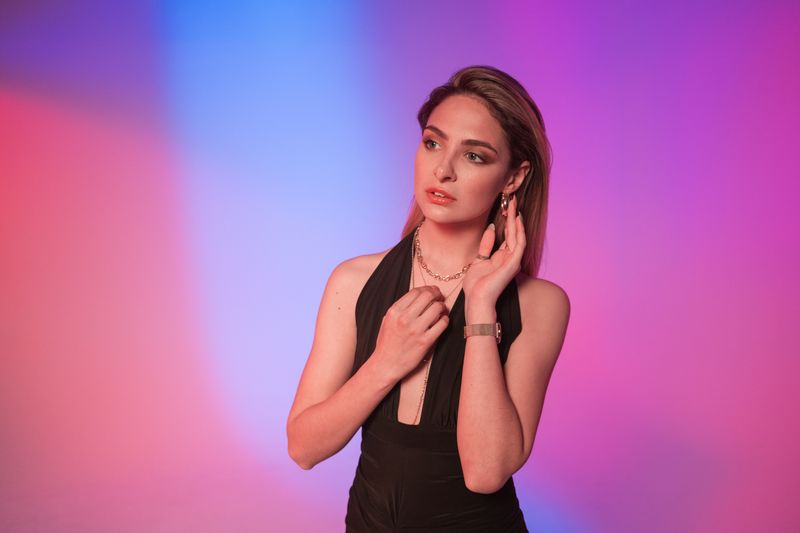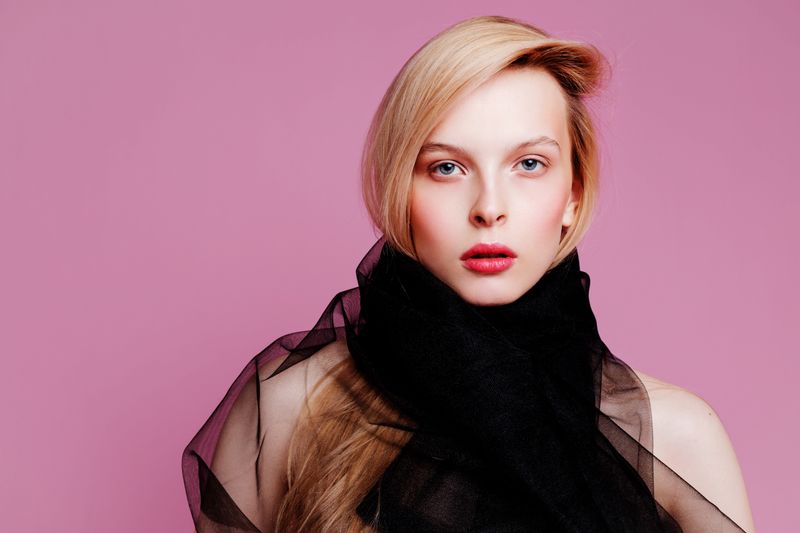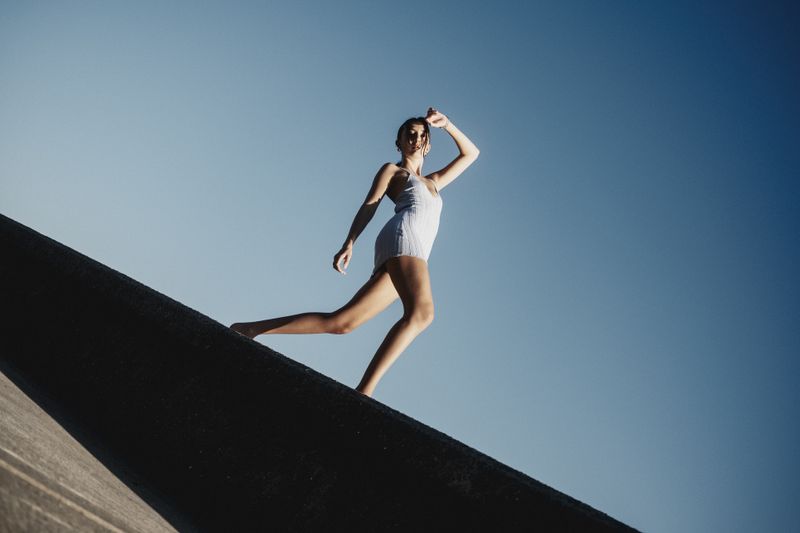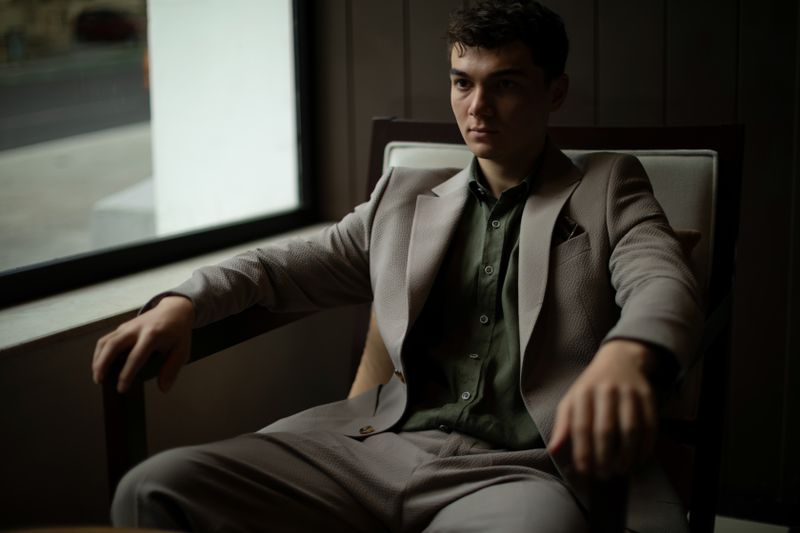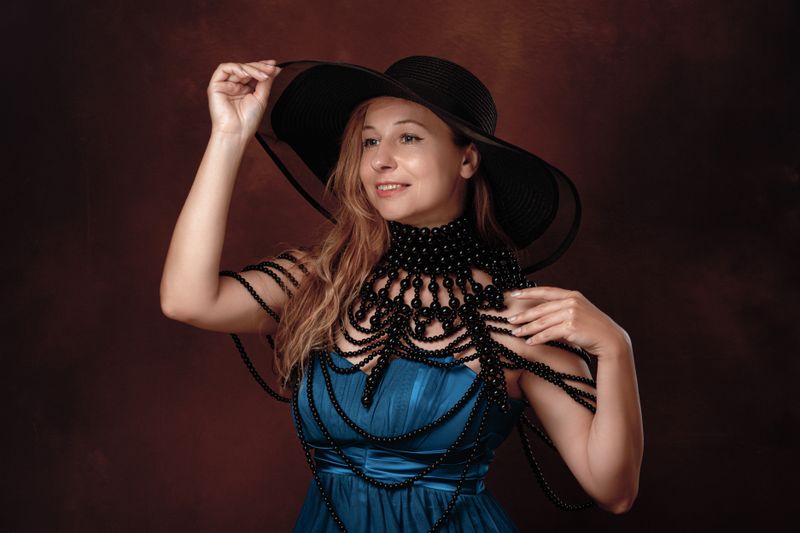
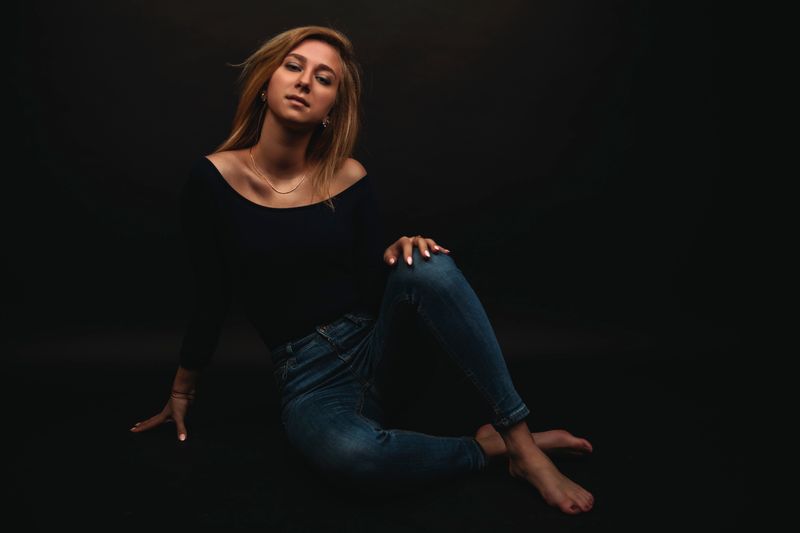
Your unique features are not something you need to hide. In the right modelling opportunity, they may be exactly what makes you memorable.
There is a particular kind of pressure that can come with pursuing a career in modelling.
You look around and see polished portfolios, familiar beauty standards and carefully curated images everywhere. Social media adds another layer, constantly presenting faces, bodies and aesthetics that can make one particular type of appearance seem like the definition of being “model material.”
And slowly, an uncomfortable question can appear:
“Do I need to change myself to belong in this industry?”
For some aspiring models in the UK, that question can become surprisingly difficult to answer.
Perhaps you have distinctive features. Perhaps your look does not fit neatly into one category. Maybe you have freckles, strong features, a distinctive hairstyle, an unconventional look, a different personal style or an appearance that simply does not resemble the models you see most often in campaigns.
It can be tempting to see those differences as obstacles.
But modelling is not about being a copy of someone who came before you.
Your individuality can become the very thing that makes you memorable.
The pressure to look like everyone else
Modelling is a visual profession, so appearance naturally matters. But there is a significant difference between presenting yourself professionally and trying to erase the characteristics that make you recognisable.
When an aspiring model repeatedly compares their appearance with highly polished images online, it can become easy to believe that success requires fitting a narrow mould.
You might start wondering whether your features are “too different.”
Whether your body is right for certain work.
Whether your hair should look different.
Whether your natural appearance is commercially appealing enough.
Whether you should make yourself look more like the models who seem to be getting attention.
That mindset can gradually take something valuable away from your portfolio: identity.
A strong modelling portfolio should help an agent or client understand who you are visually. If every image is designed to make you look like somebody else, it becomes much harder to communicate what makes you distinctive.
Professional presentation matters.
But so does recognisability.
The UK modelling industry needs more than one type of look
The UK is home to an exceptionally broad commercial and creative landscape, from fashion and editorial work to beauty, lifestyle, catalogue, television, advertising and e-commerce.
That means there is not one universal definition of what a successful model looks like.
Different briefs require different qualities.
A beauty campaign may need a particular facial character. A fashion editorial may call for something unconventional. A commercial campaign may need warmth and relatability. A catalogue client may be looking for a particular presentation style. A television or film casting may require an entirely different quality.
This is why placing yourself into a single category too early can be limiting.
You may think:
“I’m only suitable for alternative modelling.”
Or:
“My look is too distinctive for commercial work.”
Or:
“I don’t look like a fashion model, so there is no point applying.”
Those conclusions can become self-imposed boundaries.
Your appearance does not have to fit one label for your career to have potential.
Being distinctive does not mean being a niche
One of the biggest fears for models with distinctive appearances is becoming known for only one type of job.
You might be recognised for an alternative aesthetic, a particular physical characteristic or a specific campaign style. While that can be valuable, you may also want to demonstrate that you can adapt.
The answer is not necessarily to make yourself look more generic.
Instead, show range around your individuality.
Your portfolio can demonstrate that the same recognisable model can communicate different moods, styling directions and client requirements.
A strong portfolio might show:
- Clean, natural digitals
- Commercial and lifestyle expressions
- Fashion-led editorial imagery
- Different styling approaches
- Beauty-focused portraits
- Full-length images
- Confident but natural posing
- Different levels of expression
- Images that demonstrate your personality and presence
The objective is not to disguise your identity.
It is to demonstrate how versatile that identity can be.
Your “flaw” may be the feature people remember
Imagine a casting room.
Several people may photograph well. Several may have strong portfolios. Several may present themselves professionally.
Then one person walks in with a distinctive quality that immediately catches attention.
It could be the shape of their eyes.
A memorable smile.
A strong profile.
Freckles.
An unusual hairstyle.
A distinctive presence.
A particular way of carrying themselves.
There is no universal formula for what makes someone memorable.
That is precisely the point.
In a crowded visual industry, being instantly recognisable can be valuable.
The feature you have spent years wishing were different may be the feature someone remembers when looking through a collection of faces.
Difference creates identity.
And identity creates something a generic appearance cannot always provide: recognition.
Rejection does not automatically mean your look is wrong
This is one of the hardest lessons for an aspiring model to learn.
You can submit your portfolio and hear nothing.
You can attend a casting and not be selected.
You can apply to an agency and receive a rejection.
And when appearance is central to the profession, it is very easy to interpret rejection personally.
“They didn’t choose me because I’m not attractive enough.”
“My features must be wrong.”
“I should change my appearance.”
But casting decisions are often connected to the requirements of a particular brief.
A client may already have a specific visual direction in mind. A production may need a particular age range, character, styling, personality or overall casting combination.
Not being selected for one opportunity does not automatically define your potential for the next.
A rejection can be disappointing without becoming a verdict on your identity.
You do not need to become somebody else simply because one opportunity was not yours.
Stop comparing your beginning with someone else’s highlight reel
Social media can make modelling appear deceptively simple.
You see finished photographs.
You see campaigns.
You see fashion shoots.
You see models looking confident and completely at home in front of the camera.
What you do not necessarily see is the uncertainty, rejected applications, unsuccessful castings, practice, portfolio development and learning that can exist behind those images.
Comparison becomes particularly damaging when you compare your everyday appearance with someone else’s professionally produced image.
Photography involves lighting, styling, direction, posing, makeup, wardrobe and editing. A finished campaign image is not a neutral measurement of someone’s appearance.
Your job is not to win a comparison with every model you see online.
Your job is to discover what makes you compelling.
Learn to explain what makes you different
Recognising your individuality is one thing.
Knowing how to communicate it professionally is another.
If an agent or client asks, “What makes you different?” you do not need to invent an elaborate slogan.
Think about the characteristics that consistently make you recognisable.
Perhaps your look is:
- Distinctive and expressive
- Natural and approachable
- Strong and editorial
- Youthful and energetic
- Sophisticated and versatile
- Alternative without being limited to alternative work
- Commercial with an unconventional edge
Then support that description with photographs.
Your portfolio should not simply tell someone that you are versatile.
It should show them.
This is where thoughtful portfolio building becomes important. The goal is not to collect as many photographs as possible. It is to create a visual introduction that communicates your appearance, personality, range and potential clearly.
Don’t hide your individuality. Build around it.
There is a difference between being distinctive and being difficult to cast.
Professionalism, reliability, preparation and the ability to take direction still matter.
Being different is not a replacement for developing modelling skills.
It is part of your starting point.
If your appearance is distinctive, build a portfolio that makes that distinction easy to understand.
If your personality is naturally expressive, learn how to use it in front of the camera.
If your look changes dramatically with styling, demonstrate that range.
If you have a particularly strong editorial quality, explore it without assuming you can only work in editorial.
Your uniqueness becomes more powerful when it is paired with adaptability.
You don’t have to fit into the room before you enter it
Feeling like you do not belong can be one of the loneliest parts of starting a modelling career.
You may stand beside other aspiring models and wonder why everyone seems to fit the expected image except you.
But modelling is not a competition to become the most similar person in the room.
The purpose of casting is to find the right person for the right creative requirement.
Sometimes the person who initially appears different from the expected image can be precisely what gives a campaign its character.
So instead of asking:
“How can I look more like a model?”
Try asking:
“What kind of model am I?”
That question changes the conversation.
It encourages you to look at your features, presence, personality and strengths as building blocks rather than problems that need correcting.
Your individuality can become your personal brand
A modelling career is not built solely around physical appearance.
It is also built around how consistently you present yourself.
Your portfolio, digitals, social presence, communication, professionalism and ability to work with photographers, agencies and clients all contribute to how people understand you.
Your distinctive appearance can become part of that identity.
Instead of trying to remove everything unusual, consider how you can make it work cohesively across your portfolio.
The strongest version of your modelling identity may not be the version that looks most like everybody else.
It may be the version that makes someone look at your photograph and think:
“I remember her.”
Or:
“I remember him.”
That kind of recognition matters.
The right opportunity does not require you to disappear
There will always be moments when the industry feels resistant to something different.
There may be briefs where your appearance is not what the client needs.
There may be agencies whose aesthetic direction does not align with yours.
There may be castings where someone else is simply a closer fit.
That is part of a competitive creative profession.
But none of those things mean you should erase the qualities that make you yourself.
Instead, keep developing.
Improve your portfolio.
Learn how to pose.
Understand your best angles without becoming obsessed with them.
Practise taking direction.
Build confidence in front of the camera.
Present yourself professionally.
And most importantly, learn to recognise the difference between improving your modelling skills and trying to become someone else.
They are not the same thing.
Different can be your advantage
The modelling industry will always evolve.
Trends will change. Casting preferences will change. Visual aesthetics will change. What feels conventional today may look completely different tomorrow.
But one principle remains useful:
You cannot build a memorable modelling career by constantly trying to become forgettable.
Your individuality deserves to be understood, developed and presented professionally.
You do not have to turn every distinctive feature into a marketing statement.
You do not have to prove that you are different.
You simply need to stop treating difference as something that automatically needs fixing.
Your face does not need to look like somebody else’s.
Your identity does not need to follow somebody else’s career.
Your portfolio does not need to tell the same story as everyone else’s.
Find what makes you recognisable. Develop what makes you versatile. Present both with confidence.
Because the thing that makes you feel like you do not quite fit the mould may eventually become the reason a casting director, photographer, client or agency remembers your name.
Ready to build a modelling portfolio that represents you?
At Choice Model Management, we believe aspiring models should be presented as individuals, not simply reduced to a generic look.
If you are exploring modelling opportunities in the UK, take the time to understand your strengths, build a professional portfolio and discover where your particular look and presence may fit within the industry.
Being different is not necessarily something to overcome. Sometimes, it is where your modelling journey begins.