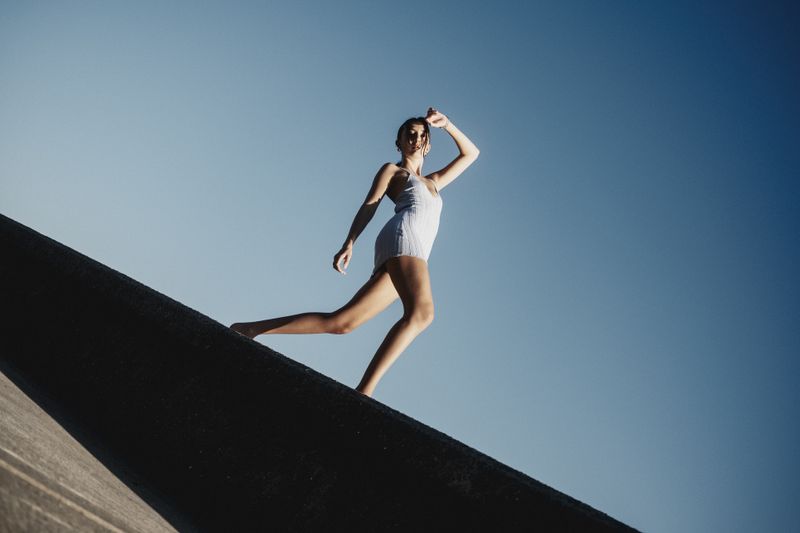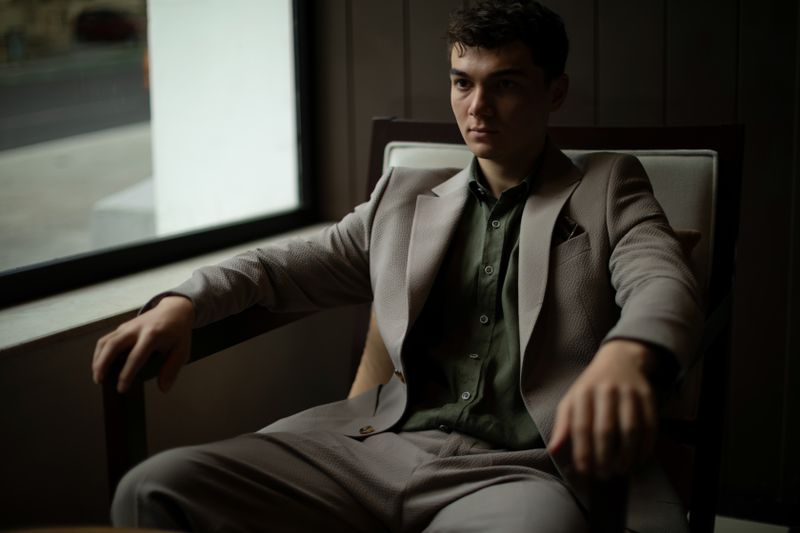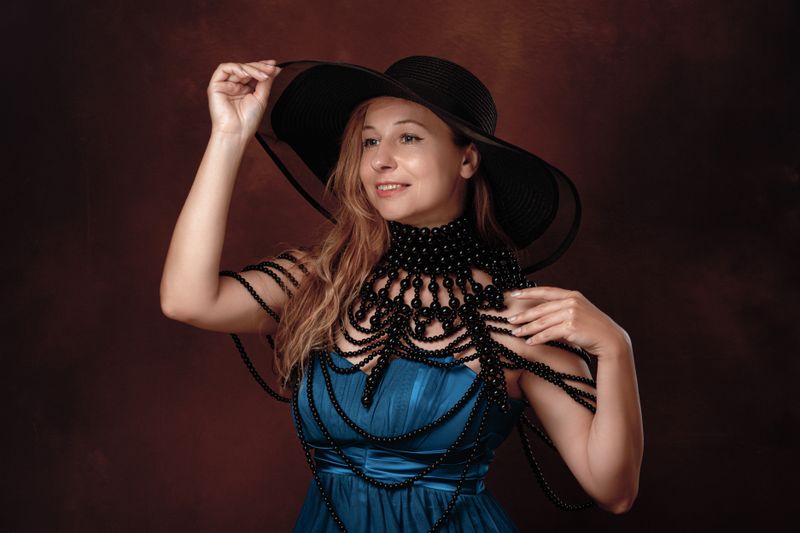
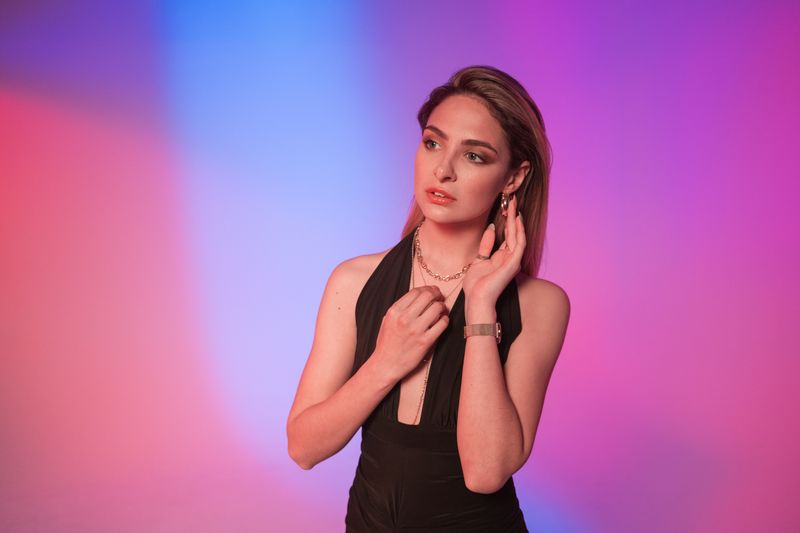
There is a moment just before you press “Submit” when everything can feel ready.
Your photos are selected. Your measurements are in front of you. Your application is filled out. You have finally found the confidence to put yourself forward.
Then comes the temptation to send it immediately.
But before you do, stop.
Read it once more.
Because a modelling application is more than a collection of photographs and contact details. It is often the first impression an agency, casting professional or client receives of how you present yourself, how carefully you work and whether you understand what has been asked of you.
In the UK modelling industry, application requirements can vary considerably between agencies. For example, Models1 asks applicants for personal details including height, location and social profiles alongside headshot, profile and full-length images. Its guidance also specifically recommends natural, unretouched photographs taken in bright natural light.
That means one simple principle matters:
Do not submit until you have checked that your application is complete, current and appropriate for the opportunity.
Here is how to do that.
1. Read the Brief Again Before You Submit
The first mistake is often the easiest to avoid.
You read the application requirements once, filled everything in, and assumed you remembered them correctly.
Before submitting, go back to the original brief.
Ask yourself:
- Have I answered every required question?
- Have I uploaded every requested document or image?
- Have I provided my current measurements where requested?
- Are my contact details correct?
- Have I followed the specified image requirements?
- Have I met the stated age, height or location requirements?
- Have I followed the requested file format or submission method?
- Have I included anything specifically requested in the brief?
Requirements are not necessarily the same everywhere.
For example, Models1’s current UK application form requests information such as date of birth, country, city or area, email, phone, height and social media details, together with specific headshot, profile and full-length photographs.
Select London also publishes specific eligibility requirements for its open calls, including different minimum heights for women and men.
The lesson is simple:
Never assume that an application you prepared for one agency will automatically work for another.
2. Check Every Detail for Accuracy
Your application should make it easy for someone to understand who you are.
Check your:
Name
Make sure it is written consistently throughout the application.
Phone number
Check every digit. If you are applying to a UK agency, make sure your number is presented in a usable format.
Email address
Send yourself a test email if necessary. A single incorrect character can prevent someone from contacting you.
Location
Be accurate about where you are based and, where relevant, your availability to travel.
Height and measurements
Use current, accurate information when the application requests it. Do not guess.
Social media
Check that any accounts you provide are active, relevant and genuinely belong to you.
Age or date of birth
Make sure the information is consistent with your official details.
This may sound basic.
It is also one of the easiest parts of an application to get wrong.
A polished portfolio cannot compensate for an application containing avoidable inaccuracies.
3. Proofread Before Anyone Else Does
A modelling application does not need to sound like an academic essay.
It does need to look considered.
Before pressing submit, read your message slowly rather than quickly scanning it.
Look for:
- spelling mistakes
- missing words
- repeated words
- incorrect names
- grammatical errors
- inconsistent capitalisation
- unnecessary abbreviations
- awkward sentences
- incorrect agency or client names
Most importantly, check the recipient’s name and the agency name.
Writing to the wrong person or referring to another agency in your cover letter can immediately make a carefully prepared application look copied.
A useful trick is to leave the application for a few minutes and read it again with fresh eyes.
If possible, read it aloud.
You will often notice awkward wording that your eyes skipped over when reading silently.
4. Do Not Send the Same Application Everywhere
There is nothing wrong with using a strong basic introduction.
There is a problem with making every application identical.
An agency is not simply looking for another person to fill out a form. It is considering whether your look, experience, presentation or potential fits what it represents.
Take a moment to understand the agency before applying.
Look at:
- the models currently represented
- the categories or divisions they operate
- the type of work they showcase
- their stated application requirements
- their communication style
- the market they operate in
- whether your own profile appears relevant
For example, UK agencies can have very different approaches to applications and image submissions. Models1 asks applicants for specific natural images, while Storm advises applicants to submit natural snapshots in daylight against a plain background and says professional photographs are not necessary for applications.
That tells you something important.
Professional does not always mean heavily produced.
Sometimes the strongest application photograph is the one that shows what you actually look like.
5. Look at Your Photos With Fresh Eyes
This is where many applications become unnecessarily complicated.
You may have hundreds of photographs on your phone.
That does not mean you should submit the ten you personally like most.
The question is:
Which photographs communicate the most useful information about me as a model?
Before submitting, check whether your images are:
Current
If your hair, facial hair, weight, styling or overall appearance has changed significantly, old photographs may create confusion.
Your application should represent the person who may actually walk into a casting.
Clear
Avoid photographs that are heavily compressed, excessively dark, blurry or difficult to view.
Appropriate
Follow the agency’s own instructions.
Models1, for example, specifically asks for natural colour photographs without filters, effects or retouching, with clear headshot, profile and full-length views.
Varied
A portfolio should not feel like the same photograph repeated ten times.
Consider whether your selection demonstrates differences in:
- expression
- pose
- framing
- styling
- mood
- movement
- character
The objective is not to prove that you can look different in every photograph.
It is to give the viewer enough information to understand your range.
6. Check the Background, Lighting and Composition
A strong subject can still be weakened by a distracting photograph.
Look carefully at what surrounds you.
Ask:
Can I clearly see the model?
Is the lighting helping rather than hiding the face?
Is the background distracting?
Is the photograph properly framed?
Does the image look intentional?
For some applications, simplicity is preferable to elaborate production.
Storm and Models1 both provide guidance favouring straightforward, natural application photographs rather than highly produced images.
That is worth remembering when you are tempted to submit an edited fashion image simply because it looks impressive.
The most impressive photograph is not necessarily the most useful application photograph.
7. Make Sure Your Portfolio Shows More Than One Expression
Imagine someone viewing your portfolio quickly.
If every image shows:
- the same expression
- the same pose
- the same camera angle
- similar clothing
- similar lighting
they may learn very little about your versatility.
Try to create a sense of progression.
One photograph might communicate a clean commercial look.
Another might show stronger editorial character.
Another might demonstrate movement.
Another might show a quieter, more natural expression.
Your portfolio does not need to contain every possible style.
It should, however, avoid making you look one-dimensional when you have more to offer.
Current UK agency portfolios themselves commonly contain multiple photographs rather than a single repeated presentation. Storm’s model pages, for example, display portfolios containing numerous images alongside model information.
8. Research Who You Are Applying To
Before applying to an agency, understand the agency.
Before responding to a casting, understand the casting.
Before approaching a client, understand the client.
This does not mean spending hours researching every person involved.
It means knowing enough to avoid sending an obviously generic submission.
Look at the relevant:
- agency website
- current model roster
- campaign style
- casting brief
- brand identity
- job description
- application instructions
If a casting specifically asks for a particular look, experience, location or availability, address those requirements honestly.
Do not make the person reviewing your application search for information that you could have provided clearly.
9. Check Your Cover Message
If you are sending an email or message alongside your application, keep it clear.
A professional introduction normally needs to answer the obvious questions:
Who are you?
Why are you contacting them?
What are you applying for?
What relevant information should they know?
How can they contact you?
You do not need to write a dramatic life story.
You also do not need to tell an agency that modelling has been your lifelong dream unless it genuinely adds something relevant.
A concise, personalised message can be much stronger than a long generic paragraph.
And always check that you have addressed the correct agency, casting professional or client.
10. Understand Professional Communication
Professionalism begins before the casting.
It appears in the way you communicate.
That includes:
- responding clearly
- following instructions
- being respectful
- checking messages carefully
- avoiding unnecessary familiarity
- respecting deadlines
- being honest about availability and experience
- asking sensible questions when information is unclear
The UK’s professional modelling environment also places importance on appropriate standards and the welfare of models. The British Fashion Model Agents Association’s best-practice guidance covers areas including respectful measurement practices and protections for under-18s.
Professionalism therefore is not simply about sounding formal.
It is about understanding that there are real people, businesses and responsibilities behind the application.
11. If You Are Under 18, Check the Rules Carefully
Young applicants should take particular care before submitting.
Requirements can differ depending on the agency and age of the applicant.
Storm, for example, states that applicants aged 18 or under must have a parent or guardian involved in its application process, with additional verification requirements for online applications.
Models1 also requires parent or guardian details for applicants under 16 on its application form.
Never assume that an adult applicant’s process applies to you.
And be particularly cautious about requests for inappropriate images. The BFMA best-practice guidance states that members should not take, send or receive body, bikini or lingerie digitals from people under 18.
If something about an application makes you uncomfortable or seems inconsistent with the agency’s published process, stop and verify it through the agency’s official channels.
12. Do One Final Five-Minute Check
Before you submit, put everything aside and run through this list.
APPLICATION
☐ Have I completed every required field?
☐ Are my contact details correct?
☐ Are my measurements and personal details current?
☐ Have I included every requested document?
☐ Have I followed the submission instructions?
PHOTOGRAPHS
☐ Are my images current?
☐ Are they clear and properly exposed?
☐ Do they represent me accurately?
☐ Have I avoided unnecessary filters and retouching where prohibited?
☐ Does my selection show some variety?
☐ Are the backgrounds and compositions appropriate?
PERSONALISATION
☐ Have I researched the agency or client?
☐ Does my application actually match the opportunity?
☐ Have I followed the specific brief?
☐ Have I personalised my message where appropriate?
PROFESSIONALISM
☐ Have I checked spelling and grammar?
☐ Have I used the correct agency and contact name?
☐ Is my communication concise and respectful?
☐ Have I checked the deadline?
☐ Am I comfortable that everything I have submitted is accurate?
If you can answer yes to all of these, then press submit.
The Best Applications Are Not Always the Most Complicated
It is easy to believe that getting noticed requires more.
More editing.
More photographs.
More elaborate styling.
More words.
More impressive language.
But an application can become weaker when the essentials disappear underneath all that effort.
A strong submission can be remarkably simple.
Current information.
Clear photographs.
Relevant experience.
Accurate details.
A tailored message.
Professional communication.
Careful attention to the brief.
That is what gives someone reviewing your application the information they need.
And perhaps most importantly, a careful final check gives you something valuable before you even receive a response:
Confidence that you submitted your best and most accurate representation of yourself.
At Choice Model Management, we believe applying for representation should be approached with preparation, honesty and professionalism. Your application is an introduction, not a performance. Take the time to make sure it represents you clearly.