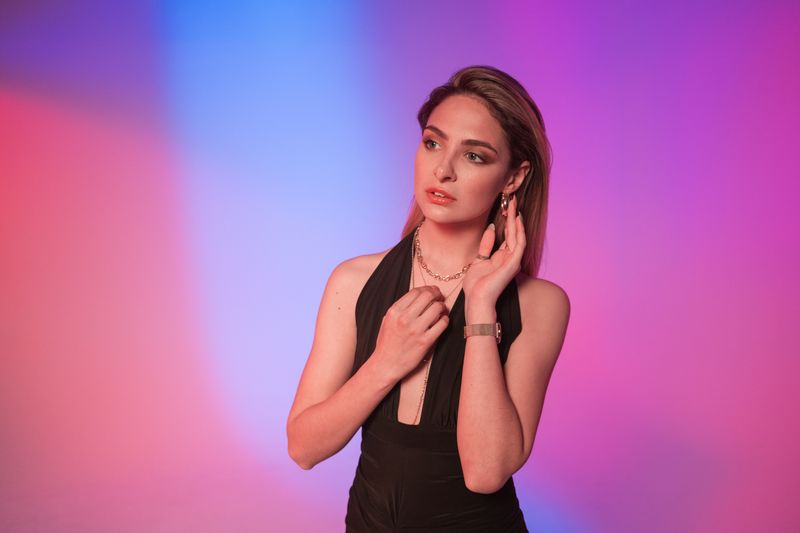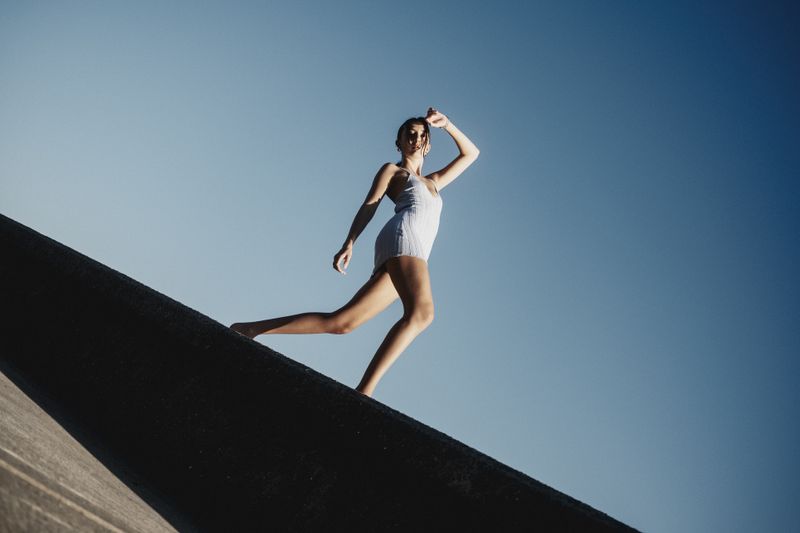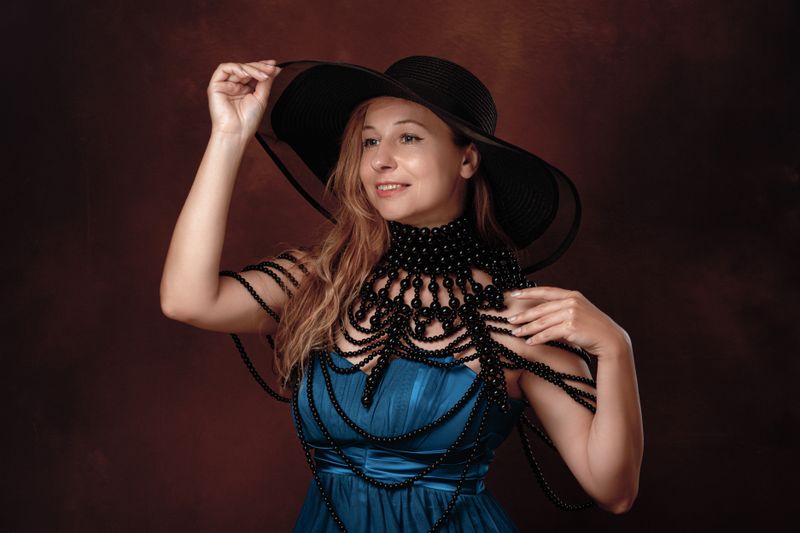
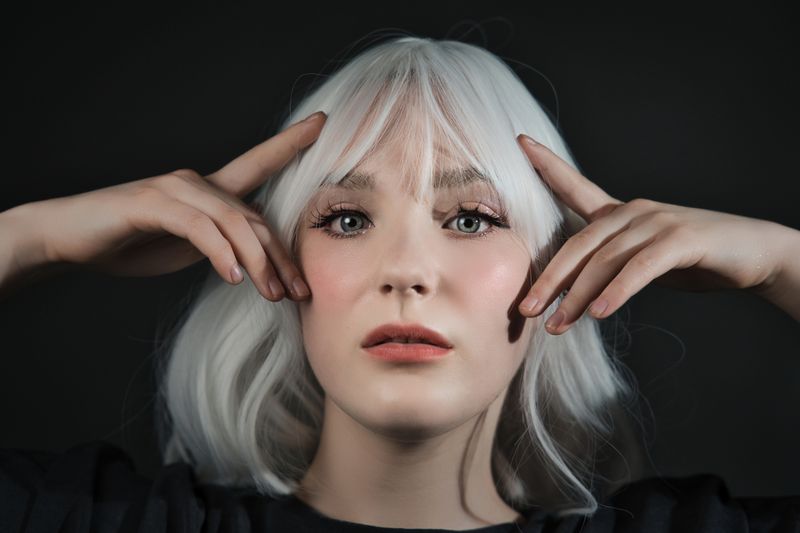
In a crowded modelling industry, being attractive is not always enough.
A strong portfolio may get someone noticed. A distinctive presence can make someone remembered.
For aspiring models in the UK, particularly those hoping to work across fashion, commercial, catalogue, beauty, editorial, television or lifestyle campaigns, one of the most valuable things to develop is not simply a collection of photographs. It is a recognisable modelling identity.
That does not mean inventing a personality, following every new fashion trend or trying to look completely different from everyone else.
It means understanding what makes you recognisable, knowing where your natural strengths fit within the industry, and presenting those qualities consistently.
The UK modelling landscape includes agencies and clients that actively value individuality, diversity and personal development. For example, London agencies represented in industry directories describe individuality, authenticity and personalised development as important parts of their approach.
So the question is not:
“How can I look like a successful model?”
A better question is:
“What makes me memorable as a model?”
What Is a Modelling Identity?
Your modelling identity is the combination of your appearance, personality, presence, strengths, style, communication and the types of work you naturally suit.
It is what people begin to associate with you when they see your portfolio or meet you at a casting.
Think beyond physical appearance.
Perhaps you have an expressive face that works beautifully in beauty campaigns. Maybe your energy is relaxed and approachable, making you naturally suited to commercial modelling. Perhaps you have a strong editorial presence, an unusual look, remarkable movement or a distinctive way of carrying clothing.
Your identity can also develop through the way you work.
Professionalism, reliability, confidence, adaptability and communication can influence how clients and creative teams experience you.
The British Fashion Council’s guidance for model agencies emphasises the importance of professional relationships, clear expectations and long-term development between models and agencies.
Your identity therefore isn’t just something that appears in a photograph.
It is the impression you consistently leave behind.
Stop Trying to Fit Into Someone Else’s Model Archetype
One of the easiest mistakes for a new model is comparison.
You look at successful models on Instagram. You notice their styling, poses, hair, makeup, photography and aesthetic. Then you start wondering whether you should become more like them.
Soon, your portfolio begins to resemble hundreds of other portfolios.
The problem isn’t learning from established models. Studying the industry is useful.
The problem begins when inspiration becomes imitation.
If every model follows the same visual formula, individuality becomes harder to recognise.
Some UK agencies have explicitly built their positioning around individuality and challenging traditional ideas about representation. Models.com, for example, describes Present Model Management as championing individuality and Brother Models as focusing on authenticity and moving beyond traditional industry moulds.
Your goal isn’t to become strange for the sake of being different.
Your goal is to become recognisably yourself.
1. Identify Your Natural Strengths
Start with something surprisingly simple.
Ask yourself:
- What do people notice about me first?
- What expressions come naturally to me?
- Do I photograph better with a serious, relaxed, energetic or playful mood?
- What type of clothing feels natural on me?
- What kind of photographs make me feel most confident?
- What compliments do I repeatedly receive?
- What do photographers or other creatives notice about me?
- What kind of modelling feels exciting rather than forced?
Don’t only focus on physical characteristics.
Your modelling strengths could include:
Your look: distinctive features, proportions, hair, eyes, skin, facial structure or overall presence.
Your expression: warmth, intensity, sophistication, playfulness, vulnerability or confidence.
Your movement: elegance, athleticism, relaxed body language or strong posing.
Your personality: approachable, charismatic, calm, energetic, sophisticated or unconventional.
Your versatility: the ability to move convincingly between different moods and creative directions.
The answers begin to reveal your modelling identity.
2. Find Your Point of Difference
You don’t need one extraordinary feature that nobody else possesses.
Your point of difference can come from a combination of characteristics.
Imagine two models with similar physical measurements.
One may have a sophisticated, understated presence and photograph particularly well in minimal styling.
Another may have a highly expressive face and energetic personality that works brilliantly for lifestyle advertising.
They may look similar on paper.
But their identities are completely different.
This is why simply describing yourself as “a fashion model” or “a commercial model” isn’t enough.
Try creating a more specific description.
For example:
“A contemporary commercial model with a warm, approachable presence and a clean, natural visual style.”
Or:
“An editorial-focused model with a strong, expressive presence and distinctive facial character.”
The description isn’t meant to become a slogan.
It is a creative direction.
It helps you decide which photographs belong in your portfolio, which opportunities make sense and how you present yourself online.
3. Build a Portfolio Around Your Identity
Your portfolio should not simply prove that you can wear different clothes.
It should communicate who you are as a model.
A strong portfolio can show range, but range without direction can become confusing.
Imagine a casting professional opening your portfolio.
Within the first few photographs, they should have a reasonable sense of your appearance, presence and potential.
The British Fashion Council’s own portfolio guidance, although written for a different fashion application context, similarly stresses clarity, simple presentation and making work easy to navigate.
For a modelling portfolio, consider including photographs that demonstrate:
Your natural appearance
Include clean, straightforward images where your features are easy to assess.
Your strongest expression
Show the expression or emotional quality that makes you particularly effective in front of the camera.
Your commercial potential
If commercial modelling is part of your direction, demonstrate natural smiles, approachable expressions and believable everyday situations.
Your editorial side
If fashion or editorial work interests you, include images with stronger styling, atmosphere and creative direction.
Your versatility
Show that you can change character without losing your underlying identity.
The objective isn’t to show everything you have ever photographed.
It is to show the right things.
4. Let Your Social Media Support Your Model Identity
Your Instagram or other professional social platforms can become an extension of your portfolio.
That does not mean every post needs to look like a magazine editorial.
In fact, excessive perfection can sometimes make it difficult for people to understand who you are.
Think about consistency.
If your portfolio communicates sophistication and your social media is filled with completely unrelated visual styles, the connection becomes weaker.
Ask:
“If someone discovered me through this account without seeing my portfolio, would they recognise the same model?”
Your visual consistency can come from:
- Similar photographic quality
- Consistent editing choices
- A recognisable fashion direction
- Repeated themes
- Appropriate behind-the-scenes content
- Professional work
- Selected personal content
- A consistent tone of communication
You don’t need to make yourself look like a brand.
You need to make your professional presence feel coherent.
5. Don’t Confuse Authenticity With Having No Direction
“Just be yourself” sounds good.
But modelling still requires professional presentation.
Authenticity doesn’t mean uploading everything.
It doesn’t mean refusing creative direction.
And it doesn’t mean avoiding styling because you want to appear natural.
Instead, think of authenticity as having a consistent foundation underneath different creative environments.
You can work with a fashion photographer, commercial client, beauty team or catalogue brand and still retain qualities that make you recognisable.
That is particularly important because professional modelling requires adaptability.
The British Fashion Council’s model agency guidance describes the relationship between models and agencies as a partnership intended to support career development over time.
Your identity should therefore be strong enough to recognise, but flexible enough to work.
6. Develop a Signature Without Becoming Predictable
A signature is not the same as doing the same pose in every photograph.
Your signature could be:
- A particular intensity in your eyes
- A relaxed and natural expression
- Exceptional movement
- A distinctive hairstyle
- A certain styling direction
- A recognisable editorial mood
- A particular kind of commercial warmth
- An unusual ability to communicate emotion
The key is repetition without monotony.
If people consistently notice the same underlying quality in different photographs, you are developing recognition.
That’s much more valuable than having one memorable photograph.
7. Choose the Right Opportunities
A unique modelling identity becomes easier to build when you stop trying to accept every opportunity simply because it is available.
Ask whether an opportunity fits your direction.
For example, a model developing a sophisticated editorial identity may not want their entire portfolio dominated by unrelated images that communicate a completely different market position.
That doesn’t mean rejecting commercial work.
It means understanding how each job contributes to the larger picture.
Your career can contain different categories of modelling while still having a clear central identity.
Some UK agencies specifically describe their role as personalised development, matching individual talent with appropriate opportunities rather than treating every model identically.
Your agency relationship should therefore be a conversation about where your strengths can create the strongest opportunities.
8. Network Through Your Identity, Not Just Your Availability
Networking in modelling isn’t simply sending messages saying:
“I’m available for work.”
Give people something meaningful to remember.
When meeting photographers, stylists, makeup artists, casting professionals or other creatives, your introduction should communicate what you bring.
Instead of:
“I’m a new model looking for opportunities.”
Consider something more specific:
“I’m developing my portfolio around natural commercial work and contemporary editorial imagery.”
Now the person has context.
They know what kind of creative collaboration might suit you.
Good networking is also about relationships.
Be professional.
Be punctual.
Communicate clearly.
Respect people’s time.
Credit collaborators appropriately.
Follow up when appropriate.
And don’t expect every connection to immediately produce paid work.
The UK industry places importance on professional conduct and appropriate relationships between models, agencies and other industry participants.
Sometimes a relationship becomes valuable months or years after the first conversation.
9. Don’t Let Rejection Redefine You
This may be one of the hardest parts of developing a modelling identity.
You send photographs.
You apply to agencies.
You attend castings.
And sometimes nothing happens.
A rejection can feel deeply personal when your appearance is part of your profession.
But one casting decision cannot define your entire potential.
A client may need a very specific look for one campaign.
An editorial may have a particular creative concept.
A casting may require a certain combination of appearance, experience, availability and brief suitability.
Not being selected doesn’t automatically mean your identity is wrong.
It may simply mean that you weren’t the right fit for that particular opportunity.
That distinction matters.
Your task is not to become suitable for every possible casting.
Your task is to become increasingly clear about the castings where you can be an excellent fit.
10. Build Confidence Through Evidence
Confidence doesn’t always appear before you start.
Sometimes it develops because you repeatedly prove something to yourself.
You complete a successful shoot.
You receive positive feedback.
You learn how to pose.
You become more comfortable on set.
You improve your portfolio.
You handle a casting professionally.
You collaborate with someone new.
Each experience gives you evidence.
Instead of asking:
“Am I good enough to be a model?”
Try asking:
“What can I improve this month?”
That question gives you somewhere to go.
You don’t need to believe you are perfect.
You need to believe you are capable of developing.
11. Your Identity Can Change
Your first modelling identity doesn’t have to become your permanent identity.
You may begin with commercial modelling and later discover an interest in editorial.
You may initially think fashion is your direction and later discover that lifestyle campaigns suit your personality better.
Your appearance can change.
Your styling can change.
Your confidence can change.
Your ambitions can change.
That’s normal.
A modelling identity should be developed, not permanently locked.
The strongest version of your identity may only become obvious after you have worked with different photographers, clients, agencies and creative teams.
The Model People Remember
There is an important difference between being seen and being remembered.
Being seen can happen because of a beautiful photograph.
Being remembered happens when several things come together.
Your appearance.
Your expression.
Your movement.
Your personality.
Your professionalism.
Your portfolio.
Your communication.
Your consistency.
Your ability to bring something distinctive to a creative brief.
That combination becomes your modelling identity.
And it doesn’t require you to become someone else.
In fact, the opposite is often more useful.
The UK modelling industry includes agencies that actively describe individuality, authenticity, diversity and personalised development as part of their approach.
So don’t spend your entire career trying to look like the model you think the industry wants.
Study the industry.
Understand the market.
Listen to professional feedback.
Develop your skills.
But protect the qualities that make you you.
Because the goal isn’t simply to create a portfolio that looks professional.
It’s to create a modelling identity that people can recognise, remember and know when to call.
Your Next Step
Take a look through your current portfolio and ask yourself one question:
“If my name were removed from these photographs, would someone still recognise the same model?”
If the answer is no, your next stage may not be taking more photographs.
It may be discovering the identity that should connect them.
At Choice Model Management, we believe developing a model is about more than simply putting photographs in front of clients. The right direction should help a model understand their strengths, present themselves professionally and build a career around what makes them distinctive.
Your difference isn’t necessarily something you need to hide.
It may be the part of you worth developing most.
Sources & Industry References
This article draws on publicly available UK industry guidance and current descriptions of UK modelling agencies, including the British Fashion Council’s Best Practice Guide for Model Agencies and Code of Practice for Fashion Models, alongside agency profiles published by Models.com.