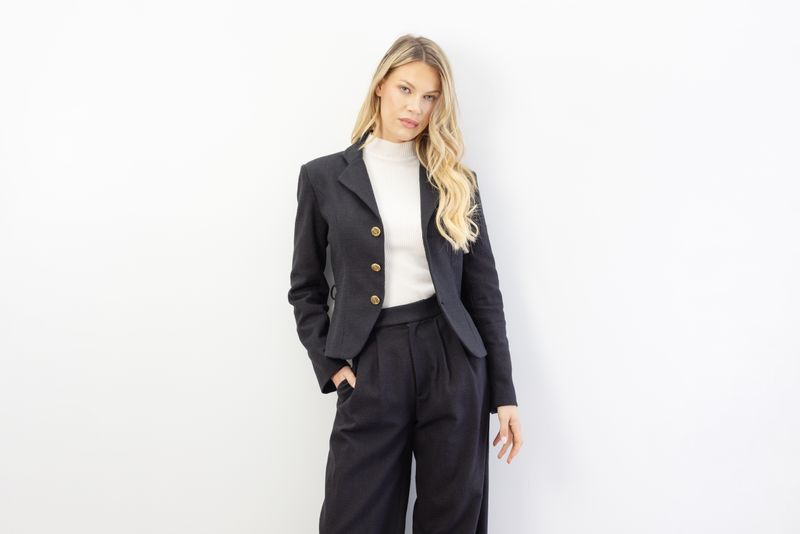


The modelling industry can look effortless from the outside. A polished photograph, a confident runway walk, a carefully styled campaign and a successful booking can make the profession appear glamorous and exciting.
Behind those moments, however, is a very different reality.
Models often work in environments where expectations are high, opportunities can be competitive and decisions sometimes have to be made quickly. A casting may last only a few minutes. A client may compare several talented models for the same brief. Feedback can be direct, rejection can arrive without much explanation, and even experienced professionals can have days when confidence disappears.
Learning how to handle pressure is therefore not simply about becoming tougher. It is about developing the ability to stay composed, make sensible decisions and protect your wellbeing while continuing to grow.
For aspiring and working models across the UK, that balance can make a significant difference to how a career develops.
When Confidence Starts to Feel Fragile
One of the hardest parts of a competitive environment is that preparation does not always remove nervousness.
You may have prepared your portfolio, practised your walk, researched the client and arrived early for a casting. Yet, when your name is called, your confidence can suddenly feel less certain.
Thoughts begin to appear:
What if I am not good enough?
What if they prefer someone else?
What if I make a mistake?
These thoughts are understandable. The problem begins when fear starts controlling your decisions.
A model who becomes overly concerned with avoiding failure may hesitate to take opportunities, experiment creatively or put themselves forward for work that initially feels outside their comfort zone.
Pressure becomes easier to manage when the focus shifts from proving your worth to performing the task in front of you.
You cannot control who else attends a casting. You cannot control exactly what a client wants. You can control your preparation, punctuality, professionalism, attitude and willingness to learn.
That is where confidence becomes more practical.
Stop Measuring Your Career Against Someone Else’s
Social media has made comparison almost unavoidable.
You may see another model travelling for campaigns, appearing in magazines, walking at fashion events or sharing photographs from exciting shoots. Meanwhile, your own career may feel quiet.
It can be tempting to interpret someone else’s success as evidence that you are falling behind.
But modelling careers rarely develop in identical ways.
One model may have strong commercial opportunities. Another may find work in editorial. Someone else may build a career through e-commerce, lifestyle campaigns, beauty, fitness, mature modelling or other specialist areas.
The useful question is not:
“Why am I not where they are?”
A better question is:
“What can I improve in my own direction?”
Your portfolio, communication, reliability, posing ability, casting preparation and understanding of the market are all areas where progress can be measured without turning another person’s career into a measurement of your own worth.
Performing Under Pressure Takes Practice
Even a well-prepared model can have an off day.
Nerves can affect body language. Pressure can make posing feel unnatural. A model who normally performs confidently may suddenly become overly conscious of every movement.
This does not necessarily mean the preparation was wasted.
Performance under pressure is a skill in itself.
Before an important casting or shoot, simplify your focus. Rather than trying to think about everything simultaneously, concentrate on a few fundamentals:
- Arrive prepared and with enough time.
- Understand the brief.
- Keep your breathing steady.
- Listen carefully to instructions.
- Give yourself permission to make small mistakes.
- Focus on the next action rather than the final outcome.
The goal is not to eliminate nerves completely. The goal is to prevent nerves from taking control.
Ambition Should Not Require Constant Exhaustion
There is another form of pressure that can be harder to recognise.
It is the belief that you must always be doing something.
Another casting. Another test shoot. Another portfolio update. Another training session. Another social media post.
Eventually, the pursuit of progress can leave very little room for recovery.
For models, rest is not necessarily the opposite of ambition. It can be part of maintaining the energy and concentration required to work well.
Constant exhaustion can affect mood, concentration, motivation and the ability to enjoy the work itself. When every day starts feeling like another performance, even opportunities that once felt exciting can become stressful.
Building boundaries around work can help.
Know when you are working. Know when you are preparing. And, importantly, know when you are finished for the day.
Learn to Leave the Casting Room Behind
Competitive environments can follow you home.
A difficult casting can replay in your mind for hours. A critical comment can become something you keep analysing late at night. A missed opportunity can make the next opportunity feel even more important.
This makes it difficult to properly switch off.
Creating a transition between professional and personal time can help. Put the phone down for a while. Go for a walk. Spend time with people who have nothing to do with modelling. Cook, exercise, read or simply do something that reminds you that your identity extends beyond your career.
Modelling can be an important part of your life without becoming the definition of your entire life.
Criticism Is Not the Same as Rejection
Feedback can be uncomfortable, particularly when you have invested considerable effort into your work.
A comment about your posing, expression, styling, presentation or suitability for a particular brief can easily feel personal.
But professional feedback and personal judgement are not always the same thing.
Sometimes feedback identifies a skill that can be developed. Sometimes it reflects a particular client’s requirements. Sometimes it simply means that your look or style did not match a specific brief.
Learning to separate these possibilities can make criticism much easier to process.
Instead of immediately asking, “What is wrong with me?”, try asking:
“Is there something useful here that I can improve?”
That small change in perspective can turn an uncomfortable conversation into professional development.
External Expectations Can Become Heavy
Models can face expectations from many directions.
A client wants a particular result. A photographer may expect adaptability. A casting team may want confidence. A manager may encourage greater consistency. Friends and family may have their own ideas about what success should look like.
Trying to satisfy everyone at once can become exhausting.
Professionalism does not mean accepting unlimited pressure.
It means understanding expectations, communicating clearly and recognising when something needs clarification. If you are unsure about a brief, ask. If you receive feedback, listen. If expectations are unrealistic or unclear, seek clarification rather than silently carrying the pressure.
Good communication can prevent many problems before they become overwhelming.
Protecting Relationships Outside Modelling
A highly competitive mindset can gradually spill into personal life.
When work becomes the main topic of conversation, missed opportunities can affect your mood and every quiet period can feel like a crisis. Friends or family may find themselves supporting you through frustrations they do not fully understand.
Maintaining relationships outside the industry provides something valuable: perspective.
People who know you beyond your portfolio, appearance or professional achievements can remind you that a casting result does not determine your value.
Make time for them.
Not because your ambitions are less important, but because a sustainable career needs a life around it.
Build a Career You Can Actually Sustain
Resilience in modelling is not about becoming unaffected by rejection, criticism or pressure.
It is about learning how to experience those things without allowing them to control your entire life.
There will be castings that do not lead anywhere. There will be photographs you do not like. There may be periods when work is quieter than you hoped. You may compare yourself with another model and temporarily question your own progress.
Those moments do not have to define your career.
The strongest foundation is often built through simple habits: prepare properly, stay professional, learn from useful feedback, take care of your wellbeing and keep developing your skills.
Most importantly, remember that a modelling career is a journey rather than one continuous audition.
Pressure Does Not Have to Define Your Potential
The competitive side of modelling is real. So are the nerves, uncertainty, expectations and disappointments that can come with it.
But pressure can also teach you how to prepare more carefully, communicate more clearly and understand yourself more deeply.
You do not need to become fearless.
You need to become capable of moving forward even when you feel nervous.
For models building their careers in the UK, that mindset can help create something more valuable than a moment of success: the confidence and resilience to keep growing when the next challenge arrives.
At Choice Model Management, we believe developing as a model involves more than appearance. Professionalism, reliability, confidence, adaptability and a healthy approach to the demands of the industry all matter.