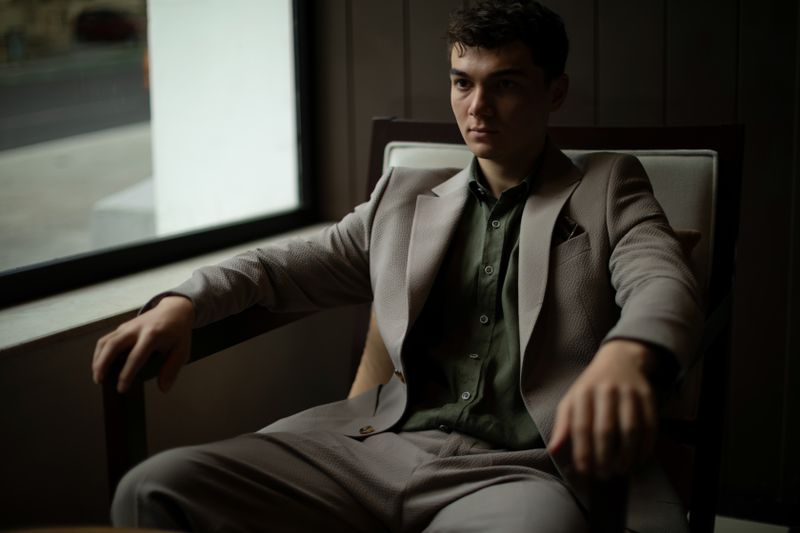

Behind every polished portfolio, confident runway walk and perfectly lit campaign photograph, there is a person.
That person may arrive on set smiling, prepared and professional while privately dealing with self-doubt, exhaustion, rejection or the pressure to look a certain way.
This is the mental side of modelling that rarely appears in photographs.
The UK modelling industry can offer exciting opportunities, creative experiences and the chance to work with talented people. But modelling can also place unusual demands on a person’s relationship with their appearance, confidence and sense of self. The British Fashion Council’s Model Health Inquiry has previously highlighted concerns around the health and working conditions of models in the UK fashion industry, including pressures surrounding body image and inadequate support.
For anyone considering a modelling career, understanding these pressures is not a sign of weakness. It is part of understanding the profession.
WHEN YOUR APPEARANCE BECOMES YOUR JOB
Most people experience days when they do not feel particularly confident about how they look.
For models, that relationship can become more complicated.
Your appearance is part of your professional identity. Photographers comment on how you photograph. Clients make selections. Casting teams compare portfolios. Stylists change your appearance. Measurements may be discussed. Images are edited and published for other people to judge.
Over time, it can become difficult to separate “How do I look today?” from “How valuable am I professionally?”
That distinction matters.
A casting rejection does not mean that someone is unattractive. A client choosing another model does not mean that someone has failed. A photographer preferring a different look does not determine a person’s worth.
Yet when appearance is repeatedly evaluated, it can be surprisingly easy to internalise those judgements.
THE PRESSURE TO LOOK A CERTAIN WAY
One of the most difficult parts of modelling can be the feeling that your body is something that must constantly be managed.
There may be pressure to maintain a particular shape, size or aesthetic depending on the type of modelling work being pursued. Social media can intensify this because models are surrounded by carefully selected images of other people’s bodies, careers and lifestyles.
The danger is that comparison can slowly become normal.
Instead of thinking:
“I am preparing for a particular type of modelling work.”
the thought can become:
“I need to change myself to be good enough.”
That is a very different mindset.
The NHS recognises that pressure around being slim, including pressure connected to occupations such as modelling, can be associated with eating disorders. Eating disorders are serious mental health conditions and can affect people of different ages and backgrounds.
Body dysmorphic disorder is another important issue to understand. It involves becoming intensely preoccupied with perceived flaws in appearance, which may be barely noticeable or not noticeable to others.
Nobody should have to sacrifice their physical or psychological wellbeing simply to remain employable.
WHEN REJECTION STARTS FEELING PERSONAL
Rejection is part of many creative careers.
Modelling can make it feel particularly personal.
You may spend time preparing for a casting, travel across London, wait alongside other candidates, meet a client and leave without knowing why someone else was selected.
Sometimes there is no dramatic reason.
The client may have needed a particular look for the campaign. They may have already had a certain visual concept in mind. Another model may simply have fitted the brief differently.
But when your face and body are part of the product being selected, it can be difficult not to think:
“They rejected me.”
rather than:
“I wasn’t the match for this particular brief.”
That small change in perspective can make a significant difference.
A modelling career is built from individual opportunities. One casting is one casting. One booking is one booking. Neither should become a complete measurement of your professional or personal value.
THE FEAR OF BEING REPLACED
Competition can create another quiet pressure.
There is always another portfolio.
Another new face.
Another model with a larger following.
Another person who seems to be booking more work.
Social media makes this particularly visible. You can open your phone after a difficult day and immediately see someone else announcing a campaign, travelling for work or appearing in a new editorial.
It can create the illusion that everyone else is moving forward while you are standing still.
But modelling careers are rarely that simple.
Different clients need different looks. Different markets value different qualities. Availability, timing, personality, experience, reliability and suitability for a particular brief can all influence opportunities.
Your career does not need to look identical to someone else’s to be progressing.
WHEN PROFESSIONALISM HIDES EXHAUSTION
Models are expected to be professional.
Be punctual.
Be prepared.
Stay positive.
Adapt quickly.
Travel when required.
Wait patiently.
Perform when tired.
Move on after rejection.
Those qualities matter.
But professionalism should not mean pretending that exhaustion does not exist.
Long days, early call times, travelling between locations and waiting around between jobs can gradually wear someone down. When those demands happen repeatedly, physical tiredness can become emotional exhaustion.
Eventually, even an exciting opportunity can feel difficult to enjoy.
Burnout does not necessarily arrive dramatically. Sometimes it looks like losing enthusiasm for work you once wanted desperately.
Sometimes it looks like irritability.
Sometimes it is simply waking up and thinking:
“I don’t know how long I can keep doing this.”
Recognising those feelings early is important.
THE LONELINESS BEHIND A SOCIAL CAREER
Modelling can look incredibly social from the outside.
There are photographers, stylists, makeup artists, producers, designers, casting teams and other models everywhere.
Yet being surrounded by people does not automatically mean feeling supported.
Models can spend significant amounts of time travelling, moving between jobs and meeting people they may never see again. Relationships can sometimes remain professional and temporary.
That can create an unusual kind of loneliness.
You can have a busy schedule and still have nobody you feel comfortable calling when a booking falls through.
You can spend an entire day surrounded by people and still feel completely alone on the journey home.
Having people outside the industry who know you for more than your appearance or portfolio can therefore be extremely valuable.
Friends. Family. Partners. Mentors. Trusted colleagues.
People who can remind you that there is a whole person behind the portfolio.
WHY TALKING ABOUT MENTAL HEALTH CAN FEEL DIFFICULT
There is another problem that receives less attention.
Some people worry that admitting they are struggling will make them appear difficult, unreliable or unprofessional.
So they stay quiet.
They smile at the casting.
They say they are fine.
They accept another long day.
They continue comparing themselves with everyone around them.
And eventually, the pressure can become much harder to manage.
Asking for help should not be confused with lacking ambition.
In fact, recognising when something is affecting your wellbeing can be an important part of protecting a long-term career.
If concerns about food, weight, exercise or appearance are becoming difficult to control, professional support matters. The NHS advises people who are concerned about an eating disorder to speak with a GP, while NHS talking therapies can provide support for several mental health difficulties, including anxiety, depression and body dysmorphic disorder.
For someone experiencing serious symptoms, seeking help early is particularly important. Recovery from eating disorders is possible, but professional support can be an important part of that process.
YOUR BODY IS PART OF YOUR CAREER, NOT YOUR ENTIRE IDENTITY
One of the healthiest distinctions a model can develop is this:
Your appearance may be part of your profession, but it is not the entirety of who you are.
You are also your personality.
Your reliability.
Your communication.
Your creativity.
Your discipline.
Your ability to work with a team.
Your resilience.
Your interests outside modelling.
Your relationships.
Your life beyond the camera.
A strong modelling career should have room for all of those things.
The goal should not be to become emotionally unaffected by criticism or rejection. That is unrealistic.
The goal is to develop enough perspective that criticism does not define you and rejection does not destroy your confidence.
WHAT A HEALTHIER MODELLING MINDSET CAN LOOK LIKE
A healthier approach does not mean ignoring the realities of the industry.
It means approaching them with boundaries.
Take care of your body rather than constantly punishing it.
Treat rejection as part of the profession rather than a verdict on your appearance.
Avoid comparing your career timeline with someone else’s.
Build relationships outside modelling.
Give yourself time away from social media when comparison becomes overwhelming.
Talk to someone when you are struggling rather than waiting until everything feels impossible.
And perhaps most importantly, remember why you wanted to model in the first place.
Was it the creativity?
The photography?
Fashion?
Performance?
Meeting interesting people?
Building confidence?
Travelling?
Trying something completely different?
Whatever brought you here, don’t allow the industry’s most difficult moments to erase it.
A MODELLING CAREER SHOULD STILL LEAVE ROOM FOR YOU
The strongest image on a portfolio tells only one part of a person’s story.
Behind that photograph is someone who may have spent years developing confidence, learning how to handle rejection and discovering where they belong in an incredibly competitive industry.
That journey deserves more than physical standards.
It deserves perspective.
It deserves support.
And it deserves honest conversations about mental wellbeing.
At Choice Model Management, we believe that pursuing modelling should not require someone to lose sight of themselves in the process. Professionalism, ambition and personal wellbeing can exist together.
Because ultimately, a modelling career is something you build.
It should never become the only thing you are.